Vehicle Fire Investigation
Everything you need to know about fire investigations
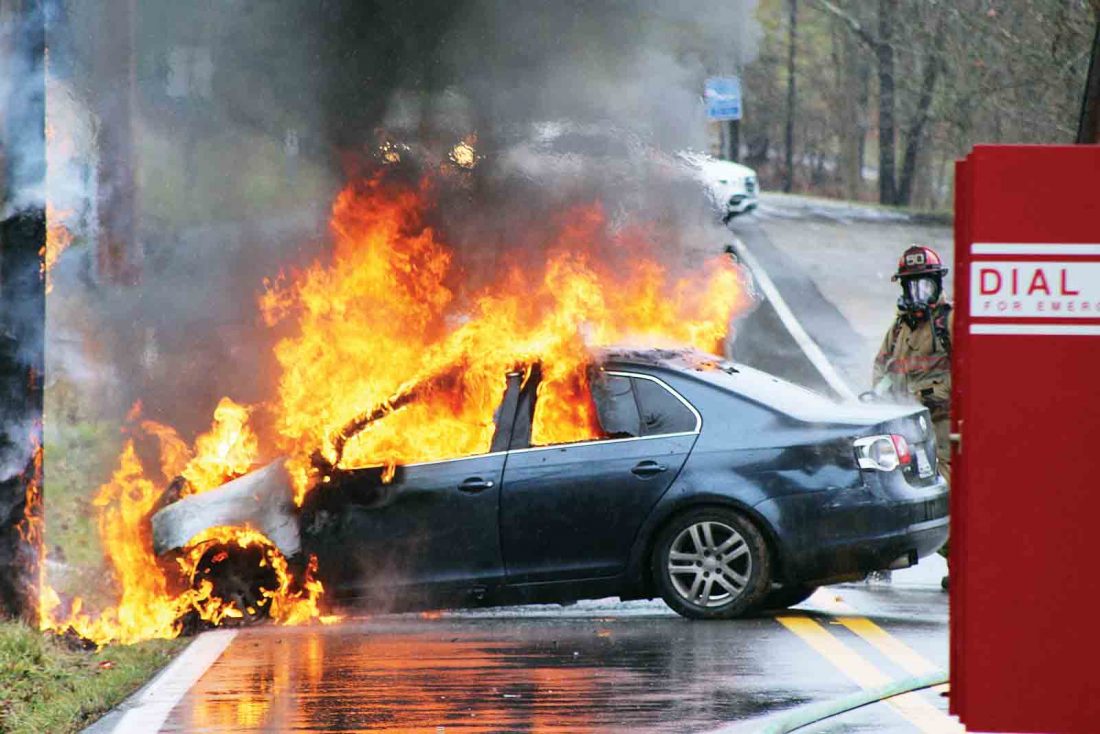
With the growing complexity of today’s vehicles, fire/arson investigators need specialized knowledge to accurately investigate and determine the origin and cause of vehicle fires. It includes practical knowledge of vehicle design, electrical systems, and components that may be encountered in a motor vehicle fire, and how these components can cause fires.
• Apply fundamental combustion concepts to evaluate possible ignition mechanisms, burn patterns, and fire spread
• Recognize the value and limitations of burn patterns to determine the area of origin of a fire
• Describe the typical burning characteristics of motor vehicle fires
• Identify and retain important physical evidence during a structure or vehicle fire inspection
• Utilize laboratory techniques to evaluate physical evidence recovered from a fire scene
Modules
Post-fire cause identification
Arrival on the fire scene
Emergency actions
Obtaining the first overview
Approach on the fire scene
Photographs on the post-fire scene
Photographs Catalogue
Indemnification of Signs and Remains
Risk moments on the post-fire scene
Documentation of post-fire scene
Identification of cause of fire
Natural causes
Lighting
Fire caused by rodents
Influence on Ignition source by animals
Self-Ignition
Influence on ignition source to flammable materials
Surcharge of electric and electronic components
Noncompliance of safety distances
Inappropriate usage of electric and electronic components
Fire by head accumulation
Fire by Lighter and Matches
Incendiary composition
Fire by welding works
Fire by sparks
Explosions
Fire by fireworks
Fire by Cigarette fervour
Defaulted handling of reannealing materials
Technical causes of fire
Heating Systems
Exhaust Systems and Catalytic Converters
Defective Isolation on electric and electronic components
Maintenance or repair failure
Component and Aggregate failure
Material failure
Hot surfaces
Frictions sparks
Electrostatic sparks
Tables
Table of safety and technical specifications of flammable and dangerous material
Table of safety and technical specifications of heat sources
Ignitable Liquid Products
Abstract
ASTM E1618
ASTM E1618 Classification Scheme
ASTM E1618 Minimum Identification Criteria
ASTM E1618 Versus Guideline
General Production Processes of Ignitable Liquid Products
Abstract
Introduction
Crude Oil Fuels
Noncured Oil Fuels
Fire Debris Analysis Methods
Abstract
Introduction
Advantages and Disadvantages of Extraction Methods
Influences on Recovery of Ignitable Liquid Compositions
Interferences in Identification of Ignitable Liquid Products
Abstract
Introduction
Substrate Background Products
Pyrolysis and Combustion Products
Guidance for Identifying Ignitable Liquids in Fire Debris
Abstract
Introduction
Gasoline
Petroleum Distillates
Isoparaffinic Products
Aromatic Products
Naphthenic-Paraffinic Products
Normal Alkane Products
Oxygenated Solvents
Other-Miscellaneous
Fire Debris Analysis
Review of Basic Organic Chemistry
Chemistry and Physics of Fire and Liquid Fuels Detection of Ignitable Liquid Residues at Fire Scenes
Sample Collection
Flammable and Combustible Liquids
Gas Chromatography and Gas Chromatography—Mass Spectrometry
Interpretation of Data Obtained from Neat Ignitable Liquids
Preliminary Examination of Evidence
Extraction of Ignitable Liquid Residues from Fire Debris
Interpretation of Ignitable Liquid Residues Extracted from Fire Debris
Other Techniques of Analysis and the Future of Fire Debris Analysis
Other Possible Examinations Conducted on Fire Debris
Standardization
Accreditation
Practical Training and Experiments
Flammability Tests of Materials
Fire Extinguishment
Fire Lightning
We are currently in the process of obtaining the below accreditations: